
Product guidance
The Pre-Call Data Audit: How to Verify Lead Identity and Contact Data Before Your Meeting
Learn how lead data verification supports pre-call research by checking provider registration status, avatar signals, and catch-all domain records.
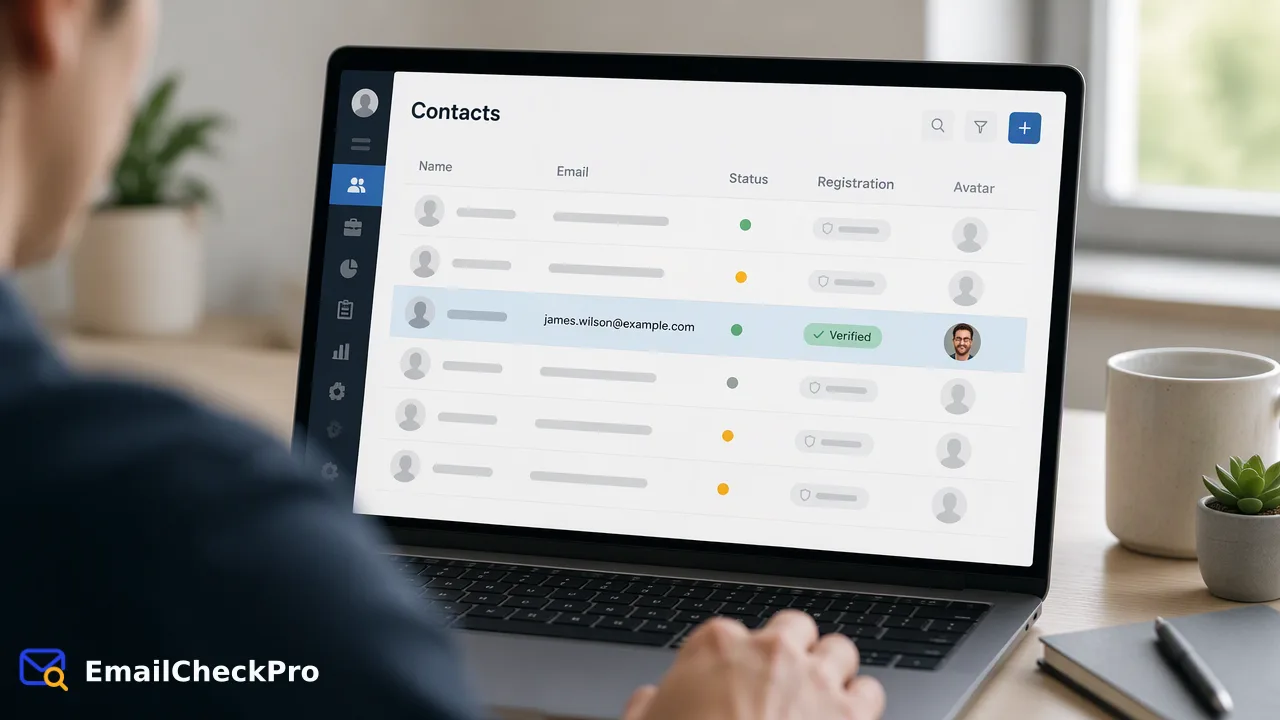
Conducting a pre-call data audit helps teams evaluate contact records using real-time provider registration and public avatar signals before critical outreach.
A pre-call data audit gives sales and revenue teams verified context about a prospect's contact details before an introductory call or targeted message. Integrating lead data verification into pre-call research helps teams confirm whether an email address is currently registered at its mail host domain at the moment of the audit. Rather than relying solely on surface formatting or static CRM notes, checking provider-level reachability signals and public avatar records informs outreach planning, reduces manual prospect research time, and supports pipeline organization before reps invest preparation effort.
The Strategic Role of Lead Data Verification in Sales Pipelines
Sales representatives spend substantial time preparing for prospect interactions, reviewing company backgrounds, and tailoring meeting agendas. When CRM records contain outdated, misspelled, or deactivated contact entries, that preparation effort is misdirected. Implementing systematic lead data verification before outreach helps organizations audit prospect data early, keeping pipeline activity focused on active, reachable records. Incomplete or unverified lead records introduce friction into sales development workflows. A contact record acquired months earlier through an inbound form or event list may no longer correspond to an active seat at the target company. Auditing records against current provider-level signals helps teams identify dormant contacts before allocating senior account executive time to pre-call planning, ensuring sales teams operate with verified operational context.
Distinguishing Syntax Formatting from Provider Registration Checks
A common mistake in contact hygiene is assuming that a well-formed email address is functional. Standard syntax checks only examine text structure—such as confirming the presence of an '@' symbol and a valid domain label. Effective lead data verification requires examining provider reachability signals. Email Check Pro queries host mail services directly to verify whether the specified address is registered at check time. This verification distinction helps teams separate structural syntax from functional provider availability:
- Syntax and Format Validation: Evaluates character formatting and basic domain structure without querying the mail server. - Account Context Signal: Examines public avatar availability across supported providers to supply additional prospect context. Auditing registration status provides operational confidence that an address is currently provisioned, establishing an objective baseline for sales qualification.
Automating Verification Across Lead Ingestion and Pre-Call Workflows
Manual contact lookup across web searches and directory tools is repetitive and inconsistent across sales teams. Automating lead data verification removes guesswork by integrating provider-level checks directly into CRM ingestion pipelines and daily pre-call workflows. Engineering and revenue operations teams can embed verification at several stages of the prospect lifecycle:
- Inbound Submission: Running immediate single-address lookups via POST /api/v1/check flags unreachable addresses during form completion or initial record creation. 2. Pipeline Staging: Executing synchronous batch checks for up to 100 contacts via POST /api/v1/batch-check helps managers review staged leads before assigning them to outbound reps. 3. Pre-Campaign Audits: Submitting large prospect files containing between 1,000 and 100,000 addresses via POST /api/v1/bulk-tasks processes entire outreach databases asynchronously. Automating these verification steps ensures that sales reps encounter pre-screened records when opening their daily task queues, allowing them to focus on meeting preparation rather than manual data cleanup.
Handling Complex Outcomes: Catch-All Domains and Public Avatars
Not every verification check produces a simple binary outcome. Understanding how to interpret ambiguous records and enriched profile signals is essential for sound pipeline management. For pre-call preparation, teams should route undetermined records into secondary research workflows rather than treating them as confirmed addresses. When evaluating supported consumer or workspace domains—specifically Gmail, Yandex, and Mail.ru—teams can also review public avatar availability using the email_avatar check type. Surfacing a public avatar provides additional context during pre-call prospect research. Teams should treat both registration and avatar outputs as time-specific operational signals that inform, rather than replace, human judgment.
FAQ
What does a registered email result indicate during a pre-call audit?
A registered result confirms that an email account is currently present and reachable at its host domain at check time.
How should teams evaluate catch-all domain outcomes?
When a mail server accepts messages for any prefix, the check returns an undetermined status rather than guessing a registration outcome.
Which providers support public avatar checks during lead review?
Avatar checks evaluate public profile image availability alongside registration status for Gmail, Yandex, and Mail.ru email families.
How can technical teams audit contact lists before outreach campaigns?
Developers and operations teams can submit individual addresses to POST /api/v1/check, evaluate up to 100 addresses synchronously using POST /api/v1/batch-check, or initiate asynchronous file-based processing for lists between 1,000 and 100,000 addresses via POST /api/v1/bulk-tasks. This flexibility supports both real-time CRM updates and large batch audits.
Learn More
Choose the product information that fits the next step in your workflow.